A Holistic Approach to Mind, Body & Soul
Wellness is about more than focusing on one part of ourselves. Our thoughts, emotions, experiences and physical responses are interconnected, and each can influence our overall sense of well-being.
My approach brings together a variety of complementary practices, mind-body techniques and life coaching tools to create an individualized experience that considers the whole person — mind, body and soul.
What is a Wellness Practitioner?
A Wellness Practitioner takes a holistic approach to well-being, recognizing that the mind, body and soul are interconnected. Rather than focusing on one area alone, a Wellness Practitioner considers the whole person — their thoughts, emotions, experiences, lifestyle and overall sense of well-being.
Wellness Practitioners may draw upon a variety of complementary techniques and practices to help individuals become more aware of themselves, explore patterns that may be affecting their well-being, and discover approaches that encourage greater balance in their lives.
There is no one-size-fits-all approach. Each person brings their own experiences, needs and goals, and the techniques used can be adapted to the individual.
Emotional Freedom Technique (EFT)
A mind-body approach combining focused awareness with gentle tapping
What is EFT?
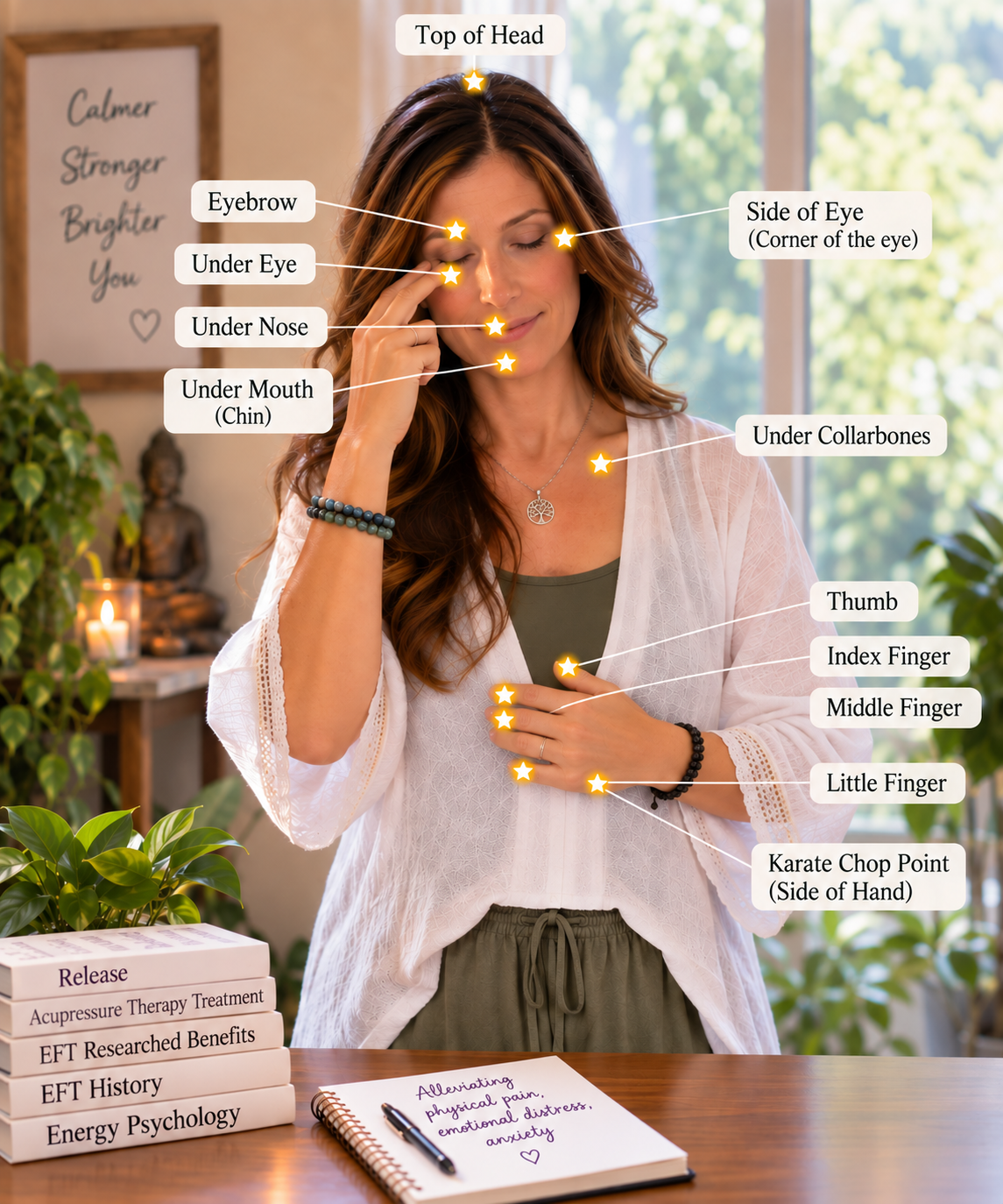
Emotional Freedom Technique (EFT), often referred to as tapping, is a mind-body technique that combines focused attention on thoughts, emotions or experiences with gentle tapping on specific acupressure points on the face and body.
The process can be used to explore emotional responses, stress, anxiety, limiting beliefs and patterns that may be affecting your overall well-being.
The Science Behind EFT
EFT has been examined in a growing body of scientific research, including randomized controlled trials, systematic reviews and meta-analyses.
Research has explored EFT in areas such as stress, anxiety and post-traumatic stress symptoms, with a number of studies reporting improvements. Research continues to develop, including investigation into how EFT may produce its effects and which individuals may benefit most.
How EFT Works
During EFT, attention is gently brought to a thought, feeling, experience or physical sensation while tapping through a sequence of specific acupressure points.
This combination of focused awareness and tapping provides a structured way to acknowledge what you are experiencing while encouraging self-awareness, relaxation and emotional regulation.
What EFT Can Be Used For
EFT may be incorporated as a complementary approach when exploring stress, emotional overwhelm, difficult emotional responses, limiting beliefs, recurring patterns and other experiences that may be affecting your sense of well-being.
Because everyone is different, the focus of EFT is adapted to the individual rather than following a one-size-fits-all approach.
What to Expect During a Session
An EFT session begins with a conversation about what you would like to explore. Together, we identify thoughts, emotions or experiences that may be connected to the concern and move through the tapping sequence at a comfortable pace.
You remain actively involved throughout the process, and the session can be adjusted according to your needs, comfort level and personal goals.
Complementary Practices & Modalities
A holistic collection of practices supporting balance, relaxation and well-being
A Holistic & Individual Approach
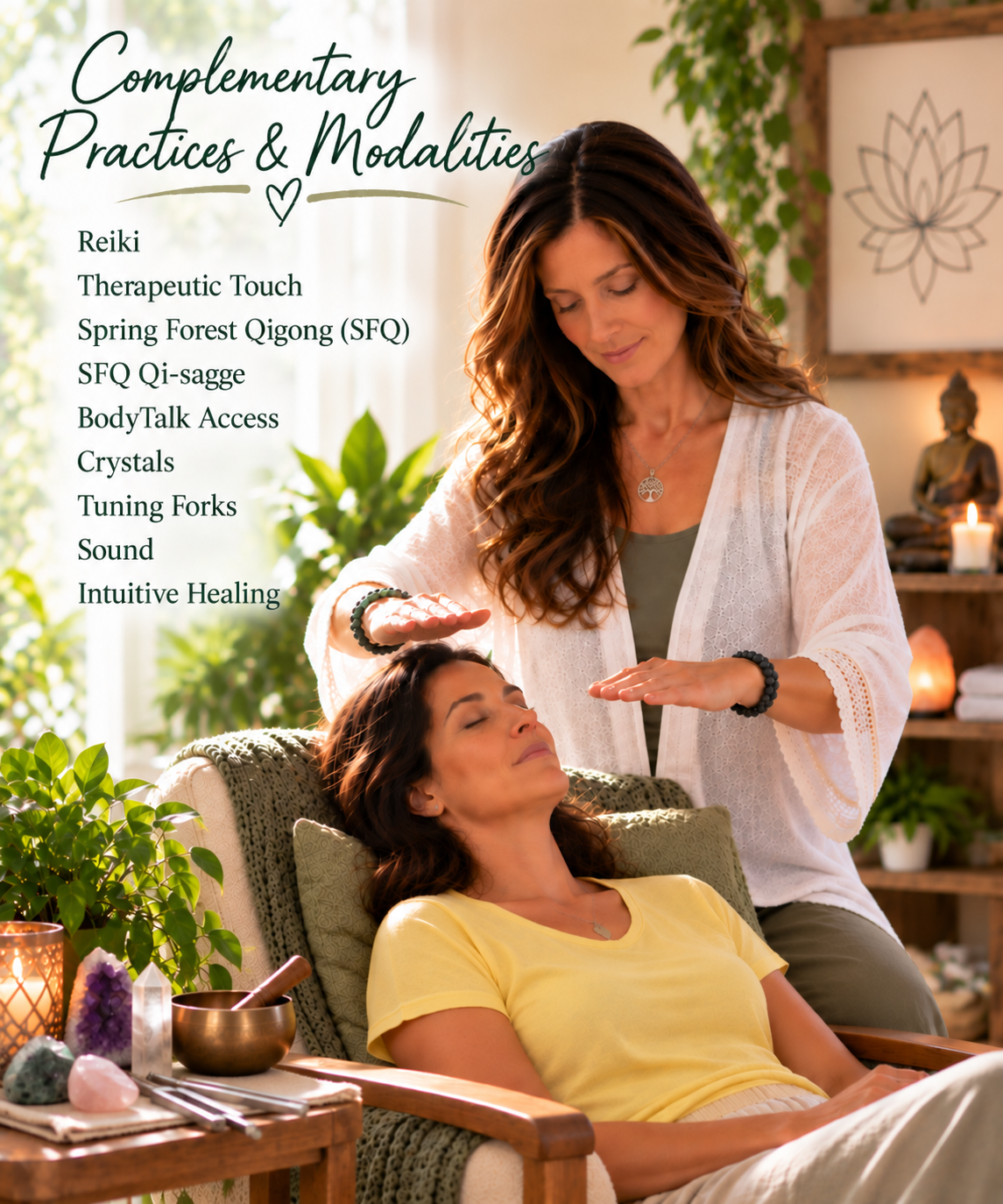
I draw upon a variety of complementary practices and modalities, allowing each session to be adapted to the individual. These approaches come from different traditions and philosophies, but many share a focus on relaxation, self-awareness, balance and the connection between mind, body and overall well-being.
Depending on your needs and preferences, a session may incorporate one practice or a combination of techniques. There is no one-size- fits-all approach — the practices used are selected thoughtfully according to the individual and the purpose of the session.
Reiki
Reiki is a Japanese complementary practice in which the practitioner gently places their hands on or just above the body. Within Reiki tradition, the practice is described as working with universal life-force energy and is commonly used to encourage relaxation, balance and a sense of well-being.
Therapeutic Touch
Therapeutic Touch is a non-invasive complementary practice developed within the nursing profession. The practitioner generally works with their hands a short distance from the body using a structured process traditionally described as assessing and balancing the person’s energy field.
Spring Forest Qigong (SFQ)
Qigong has roots in traditional Chinese practices and incorporates concepts of qi, movement, breathing, focused awareness and meditation. Spring Forest Qigong brings these principles together in simple practices designed to encourage relaxation, awareness and balance.
SFQ Qi-sagge
SFQ Qi-sagge incorporates principles from Spring Forest Qigong through gentle hands-on techniques. The practice combines focused intention with touch and traditional concepts of qi to encourage relaxation and a sense of energetic balance.
BodyTalk Access
BodyTalk Access draws upon mind-body concepts and uses a series of simple techniques, including gentle tapping and specific BodyTalk procedures. The practice is intended to encourage relaxation, self-awareness and the body’s natural processes of maintaining balance.
Crystals
Crystals have been incorporated into spiritual and wellness traditions for centuries. Within complementary practice, different crystals are traditionally associated with particular energetic qualities and may be incorporated into a session as a tool for intention, reflection, relaxation or personal connection.
Tuning Forks & Sound
Sound-based practices use vibration, tone and focused listening to create a calming sensory experience. Tuning forks and other forms of sound may be incorporated into a session to encourage relaxation, present-moment awareness and a greater sense of connection with the body.
Intuitive Healing
Intuitive healing brings together attentive observation, intuition and complementary practices in a highly individualized way. Rather than following the same sequence for every person, I may draw upon different techniques according to what arises during the session and what feels appropriate for the individual.
Complementary to Your Health Care
These practices are complementary approaches and are not substitutes for medical assessment, diagnosis or treatment. Concepts such as subtle energy fields and proposed energetic mechanisms have not been scientifically established, and the amount and quality of research varies among individual practices. Complementary practices can be used alongside appropriate conventional health care.
Life Coaching
Creating greater awareness, clarity and meaningful positive change
What is Life Coaching?
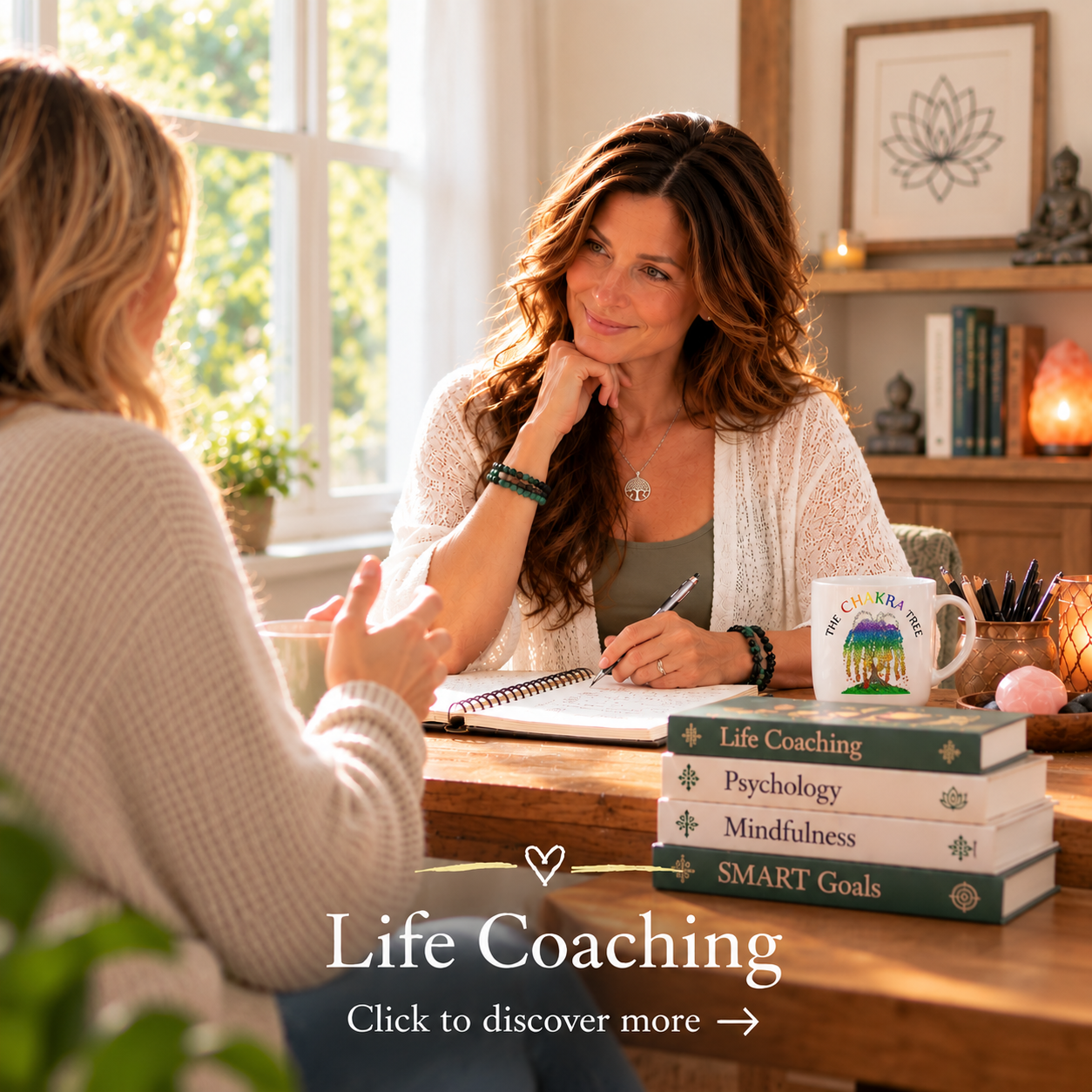
Life coaching is a collaborative process that provides a supportive space to explore where you are, where you would like to be and what may be standing between the two. Through conversation, reflection and purposeful questions, coaching can help you gain greater clarity about your goals, values, priorities and the changes you would like to make in your life.
Rather than telling you what you should do, coaching encourages you to discover your own insights, possibilities and next steps. The process is individualized because your experiences, strengths, challenges and goals are uniquely your own.
My Approach to Life Coaching
My approach recognizes that our thoughts, emotions, experiences and physical responses are interconnected. Coaching therefore looks beyond simply setting goals and considers the whole person — mind, body and soul.
Depending on your individual needs, our work may include reflective conversation, mindfulness, somatic awareness, breathing practices, EFT and other complementary techniques that encourage greater self-awareness and personal growth.
Self-Discovery & Awareness
Meaningful change often begins with understanding yourself more deeply. Coaching creates an opportunity to explore your values, beliefs, strengths, needs and recurring patterns with curiosity rather than judgement.
Developing greater self-awareness can help you recognize what is working well in your life, what may no longer be serving you and where you may want to create change.
Goals & Moving Forward
Once you have greater clarity about what you want, coaching can help turn those ideas into realistic and meaningful steps. Together, we can explore priorities, identify possible obstacles and develop practical actions that move you toward your goals.
When appropriate, we may use approaches such as SMART goals to help make your goals specific, measurable, achievable, relevant and time-focused while still allowing room for flexibility and change.
Building Resilience
Life does not always unfold as expected. Coaching can provide space to explore how you respond to challenges, transitions and periods of uncertainty while identifying strengths and resources you may already have within you.
Building resilience is not about avoiding difficult experiences. It is about developing greater awareness, flexibility and confidence in your ability to navigate life’s changes and continue moving forward.
Creating Positive Change
Change does not always have to begin with a dramatic transformation. Sometimes small, intentional shifts in perspective, habits, boundaries or daily choices can gradually create meaningful differences in your life.
Coaching provides encouragement and accountability as you explore those changes, helping you remain connected to what matters to you while recognizing and celebrating the progress you make along the way.
What to Expect During a Session
A coaching session is a conversation centred around you. We begin with what is happening in your life and what you would like to explore. Through thoughtful questions and reflection, we can uncover patterns, possibilities and practical next steps.
Some sessions may focus primarily on conversation, while others may incorporate mindfulness, breathing, somatic awareness, EFT or other techniques when they are appropriate and comfortable for you. The process evolves according to your individual needs and goals.
It’s Within You
I believe many of the answers we search for are already within us. Sometimes we simply need the space, support and opportunity to slow down, listen and discover them. Life coaching is not about becoming someone else — it is about gaining a deeper understanding of yourself and creating a path forward that feels meaningful to you.